
completed
Europe's construction industry is booming, it is the engine of economic growth and one of the largest employers. But this trend has enormous downsides - the ecological footprint is huge.
About 40 percent of global resources are consumed on the construction site and there are viable alternatives: Many substances that have already been taken from nature can be reused. Cities are a huge, man-made resource base.
Climate-friendly construction is possible
The construction industry is an engine for economic growth and one of the largest employers. At the same time, every new building devours huge amounts of raw materials and nature. Cement, which is used everywhere for the production of concrete, belongs to the particularly large climate sinners. It accounts for about eight percent of global CO2 emissions. And important raw materials such as copper and sand are gradually becoming scarce. It's time to rethink the industry, and there are certainly viable alternatives: experiments in Germany and companies in Vienna, Amsterdam and Copenhagen show that there are solutions. Climate-friendly building is possible because many of the substances that we have already taken from nature, can be used again. Our cities are a huge commodity warehouse created by us humans.
"We have to learn to think and plan in such a way that there will be no more waste during demolition or dismantling." Demand from Professor Annette Hillebrandt
Professor Annette Hillebrandt, architect and scientist from the University of Wuppertal: "Our landfills are already full". She would like to see all manufacturers legally obliged to take back their products. Then there would be a variety of materials on the market, which could be installed again and again.
Legal obligations for recycling still far away
The Danish architect Andres Lendager does not want to wait for the legislature anymore. The futurist and entrepreneur has set up the company's own recycling warehouse in Copenhagen's harbor. Here, he and his team find the planning basis for spectacular new buildings. Removed windows from refurbished schools, scrap wood, recycled concrete and old brick modules are incorporated into the design of entire streets. Lendager is convinced: "We are committed to the next generation, we have to be role models, in the way we build, live and conserve our resources".
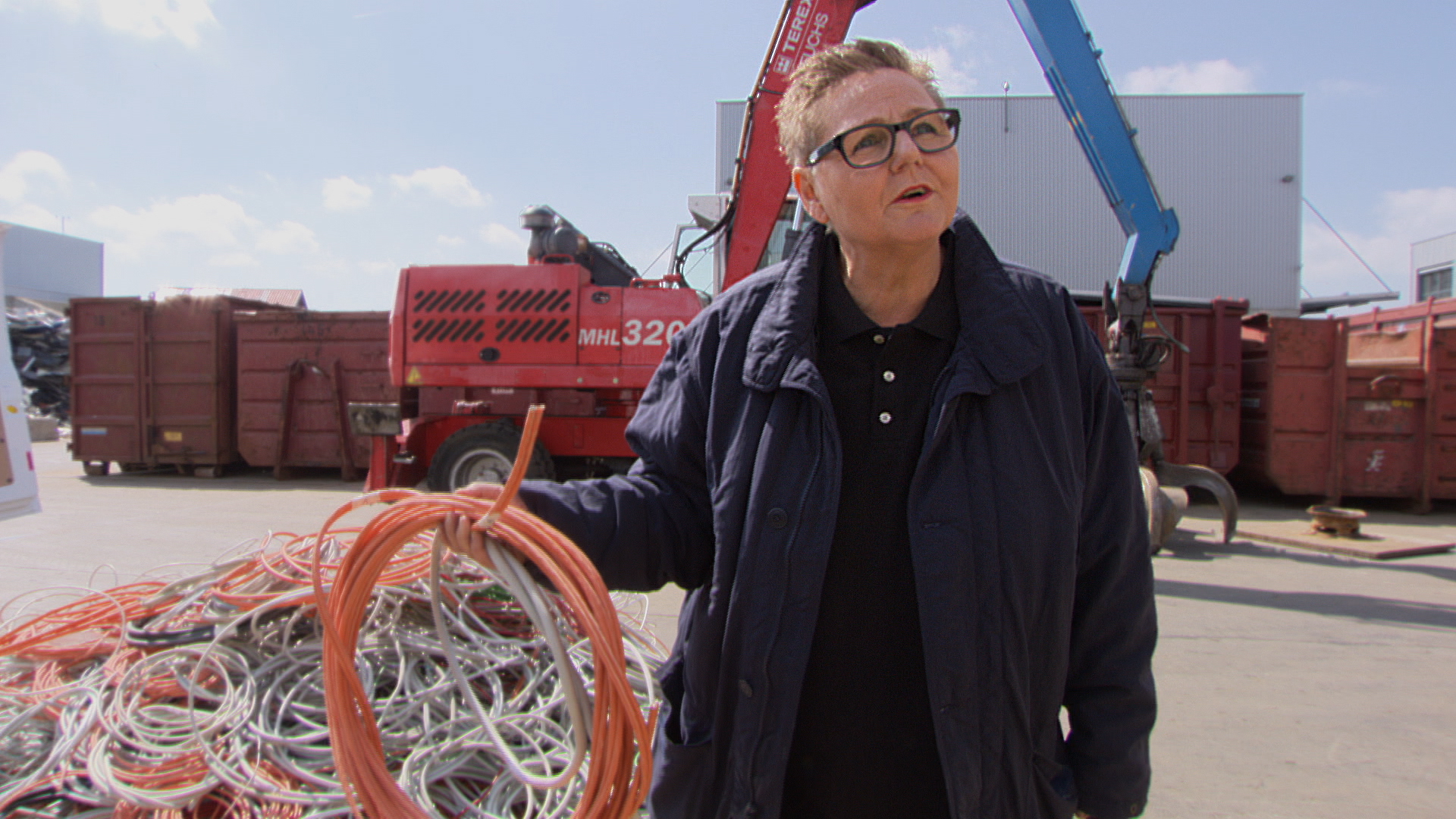
Brigitte Kranner knows that too. Together with her husband, she manages the business of a large scrap metal trade in Vienna. Kranner is regarded as a recycling expert and "Urban Miner". When it comes to old cables, sorted heaters or aluminum windows, she sees the true value behind the often bonded and polluted metals: "For example, as here with the copper," she explains while peeling the light pink glowing metal from an old plastic shell: "This is 100 percent recycled, simply melted down and back to perfect copper wire." This principle could apply to many components, says Kranner: "We should use as much as possible of what is already here - and extract as little as possible from nature."
Old becomes new
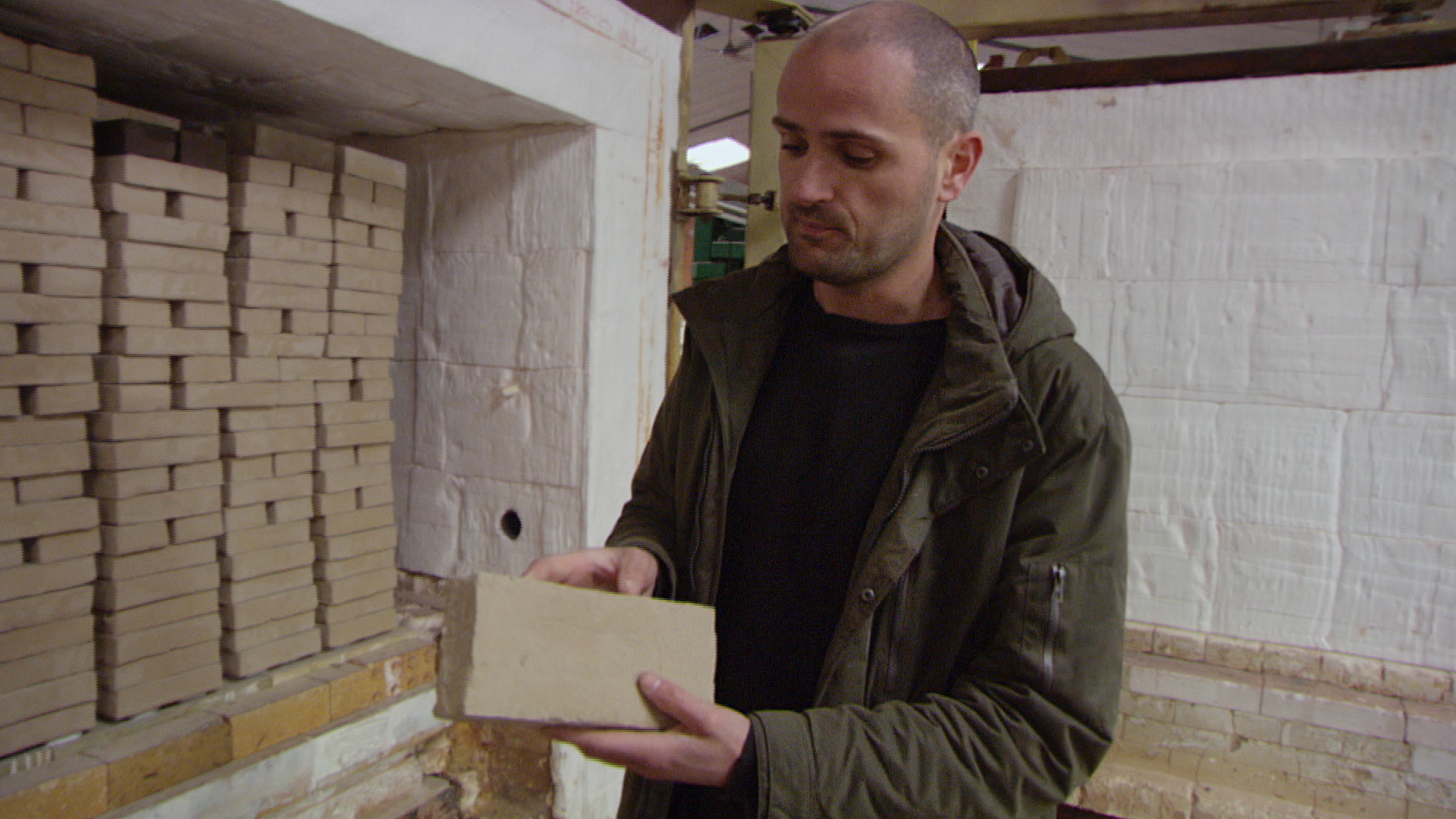
Tom van Soest, for example, is collecting broken bricks, roof tiles, mortar residues and tiles from demolished houses in the Netherlands. He crushes and mixes the waste with new clay. He was driven by the idea that something new and beautiful could come out of the rubble. It took a long time until he had the right recipe for new stones, the designer says in retrospect. Meanwhile, his Amsterdam company processes 1,000 tonnes of waste per year into new, colorful clinker, façade and building blocks. "I always wanted a colorful façade", enthuses Cecilia Petit, one of the first customers on the terrace of her apartment in Amsterdam: "Now it is almost like a Hundertwasser house."
Architecture experiment
Before the old Dortmund coal-fired power plant Knepper collapses to rubble and ashes in a spectacular demolition, committed architecture students bring out intact steel pipes. They start an experiment: A pavilion is to be built for the Federal Horticultural Show in Heilbronn, using only materials that have already passed one lifecycle: The steel tubes are transformed into steel girders that hold an open cube like the branches of a tree. The recycling glass of the façade comes from used and broken glass, the floor is covered in white porcelain breakage. Lisa Krämmer, one of the students of the Karlsruhe Institute of Technology (KIT), says: "It glitters like snow," We did not use any adhesives or paints, there are no silicone joints, the pavilion is sorted, all materials are easy to clean. It can start a new life cycle ".
A documentary by Andrea Ernst, Austria 2019

TV Documentary | Austria | 2019
52 minutes | HD
Broadcast: 06.11.2019 | 20:15 | ORF 3sat
in cooperation with the Federal Ministry of Education, Science and Research,
supported by the Austrian Television Fund and VAM